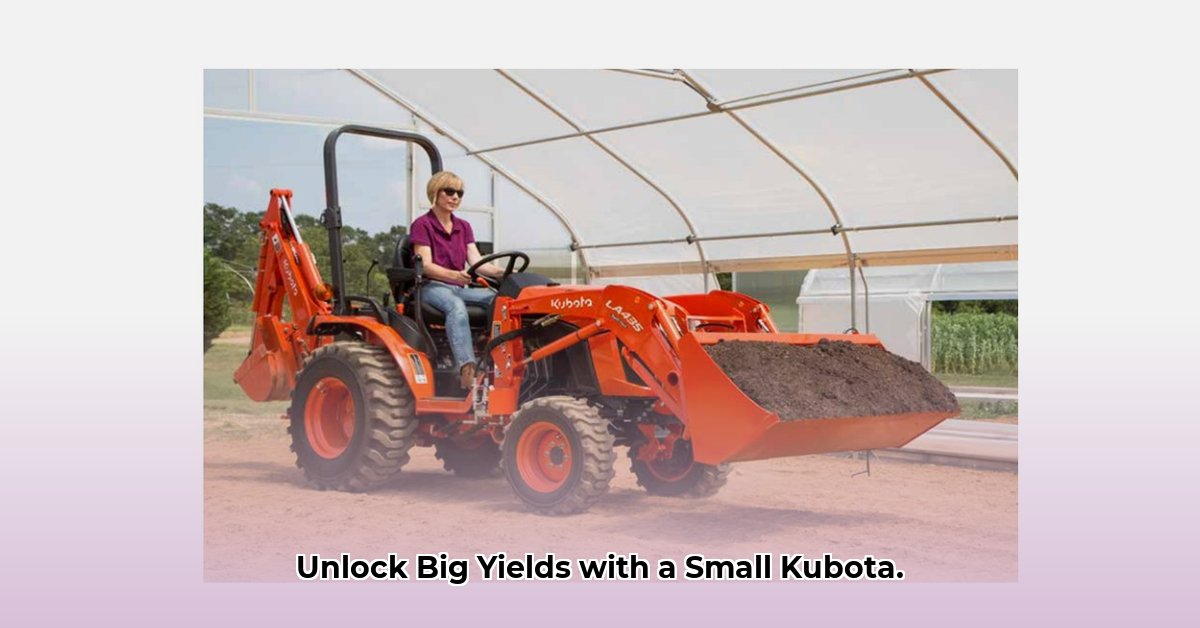
Small Kubota Tractor with Backhoe: Your Sustainable Farming Partner
A small Kubota tractor equipped with a backhoe offers unparalleled versatility for sustainable farming practices. Its compact size excels in navigating confined spaces on smaller farms or intricate landscaping projects. The backhoe itself functions as a multi-tool, adept at digging, trenching, and material movement, proving itself a true workhorse. But how can you truly maximize its potential for eco-friendly farming? Let's explore the possibilities. For more information on Kubota's compact tractor options, check out Kubota's small tractor line.
Precision Farming: Working Smarter, Not Harder
Sustainable agriculture isn't solely about food production; it's about responsible cultivation. This is where your compact Kubota tractor shines. Many models offer GPS guidance, enabling precise application of fertilizers and pesticides. This pinpoint accuracy minimizes waste and reduces your environmental footprint. Isn't precise application more efficient than broad-spectrum spraying? The savings are substantial – considerably less fertilizer and pesticide usage, saving money and protecting the environment.
No-Till Farming: Happy Soil, Happy Planet
No-till farming minimizes soil disturbance, vital for soil health and biodiversity. Your backhoe becomes crucial here. It can create raised beds for improved drainage and aeration or strategically manage water channels, key components of effective no-till systems. This fosters healthier soil structures, leading to stronger plant growth and reduced reliance on chemical inputs. Studies suggest no-till farming can even sequester carbon in the soil, providing further environmental benefits. "No-till practices significantly increase soil organic matter and improve water retention," states Dr. Emily Carter, Soil Scientist at the University of California, Davis.
Water Wise: Conserving Our Most Precious Resource
Water conservation is essential in sustainable agriculture. Your Kubota tractor, with its backhoe, facilitates efficient irrigation. Create precisely sized irrigation ditches to direct water where needed, minimizing waste. This targeted approach is especially beneficial for smaller plots. Isn't precise water delivery more efficient than flood irrigation? Think about the savings on water bills and the positive environmental impact. Combining the tractor with a drip irrigation system further enhances the precise delivery of water to plant roots, reducing evaporation and runoff.
Expanding Your Toolkit: Attachments for Every Task
Don't limit yourself to the backhoe. Kubota tractors are compatible with various attachments, each designed for a specific task. A tiller prepares soil for planting, while a box blade levels land efficiently. Need to plant trees or build fences? A post-hole digger is perfect. These attachments transform your compact tractor into a versatile machine for nearly any farm job. "The ability to adapt to different tasks through attachments is a game changer," comments John Miller, owner of Miller Family Farm in Iowa.
Maintenance Matters: Keeping Your Partner Running Smoothly
Regular maintenance is crucial for extending your Kubota tractor's lifespan and ensuring peak performance. This translates to lower fuel consumption and fewer breakdowns, saving you money and time. It's about investing in longevity. Considering biodegradable hydraulic fluids or exploring alternative fuel sources (where feasible) further strengthens your sustainable practices. While these options might be initially expensive, the long-term environmental benefits are significant.
The Economics of Sustainability: Long-Term Gains
The upfront cost of a Kubota tractor with a backhoe can seem significant. However, consider the long-term advantages: reduced labor costs, resource consumption, and increased yields. These factors, combined with environmental benefits, suggest a sound investment that pays off over time. "I've seen a significant return on investment within three years," shares Sarah Jenkins, owner of Oak Ridge Farm in Vermont. Many farmers find the initial investment is more than offset by increased efficiency and reduced operational costs.
How to Choose the Best Compact Tractor for Sustainable Farming Practices
Choosing the right compact tractor is crucial for efficient and sustainable farming. Consider farm size, soil conditions, and crop types. Fuel efficiency and reduced environmental impact are paramount. Evaluate the long-term costs, including maintenance and fuel expenses. Versatility through compatible implements significantly impacts efficiency.
Assessing Your Farming Needs
Before choosing a tractor, assess your farm's specific requirements. What is your acreage? What crops do you grow? What tasks require mechanization? A small, versatile tractor might suffice for a few acres of diversified crops, while larger farms might require more horsepower. Consider essential implements. Do you need a tiller? A backhoe? A planter?
Fuel Efficiency: A Cornerstone of Sustainability
Fuel costs are a major expense. Careful consideration of fuel efficiency is key. Modern diesel engines are efficient but still have an environmental footprint. Biodiesel offers a greener alternative. Electric tractors are emerging, promising zero tailpipe emissions. However, their charging infrastructure and battery life are factors to consider. Weigh the upfront cost against long-term fuel savings and environmental benefits.
The Importance of Versatility
A sustainable farming operation values efficiency. The right tractor isn't just about horsepower; it's about adaptability. Look for a tractor compatible with various implements, like a three-point hitch. A backhoe expands your capabilities beyond tilling, proving invaluable for various tasks. This represents considerable cost savings compared to hiring specialized equipment.
Maintenance and Longevity: Factors in Total Cost of Ownership
The initial purchase price is only part of the equation. Consider maintenance costs. Regular servicing and timely part replacements are critical. Choose a tractor with readily available parts and a strong service network. This minimizes downtime and keeps your operation running smoothly.
Sizing Up: Matching Tractor Size to Your Needs
Don't overestimate your needs. An oversized tractor can be inefficient and costly, especially on small plots. Conversely, a small tractor struggling with heavy tasks decreases efficiency. Analyze your workload and select an appropriately sized model.
Kubota’s Compact Tractor Line
Kubota offers a range of compact tractors suitable for diverse sustainability-focused agricultural practices. Their models often feature fuel-efficient engines and are built for maneuverability in tight spaces, ideal for smaller farms or varied terrain. Consult their website for specifications.
Making the Right Choice
Selecting a tractor is a significant investment. Carefully scrutinize every element—from your farming needs to fuel costs and long-term maintenance. By prioritizing sustainability and operational efficiency, you maximize your chances of securing a tractor that works effectively and profitably for years to come.